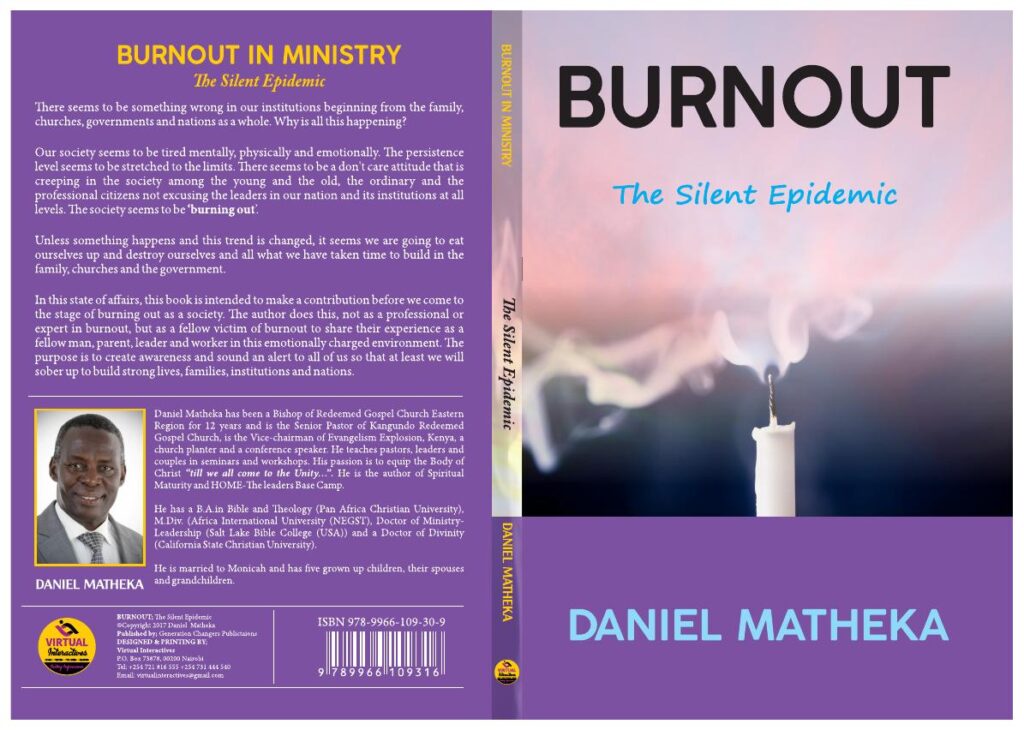
Pastoral ministry is a calling that asks a great deal. Pastors preach, counsel, visit the sick, bury the dead, settle disputes, manage buildings and budgets, and remain available at almost any hour. It is not surprising that burnout, a state of deep emotional, physical and spiritual exhaustion, is widely recognised as a serious concern among those who serve in ministry. Training institutes are responding by placing greater emphasis on emotional health, rest and sustainable ministry practices.
What burnout looks like
Burnout rarely arrives suddenly. It usually builds quietly over months or years. Common signs include persistent tiredness that rest does not fix, loss of joy in work that once felt meaningful, growing cynicism or irritability, withdrawal from people, difficulty praying or reading Scripture for any reason other than preparation, and a sense that nothing one does is enough. Some leaders also notice physical symptoms such as poor sleep or frequent illness.
Why ministry carries particular pressure
Several features of church leadership make it easy to overextend. The work has no clear end: there is always another person to visit or another need to meet. Expectations can be high and sometimes unspoken. A pastor’s home and work often overlap, so the pressure follows the leader through the front door. Many leaders also feel that admitting weakness would be a failure of faith, so they carry their burdens alone.
Practices that help
Training programs that address this concern often teach practical, biblical habits such as:
- A weekly day of rest. Sabbath is not a reward for finishing the work; it is a rhythm built into creation. Leaders who rest model trust in God to the people they serve.
- Healthy boundaries. Deciding in advance when and how one is available, and sharing responsibility with other trained leaders rather than doing everything alone.
- Honest friendships. Having at least one or two people, outside the immediate congregation, with whom the leader can speak openly and who can ask hard questions.
- Care of the body. Sleep, simple exercise and sensible eating are spiritual matters because the body and spirit are connected.
- Ongoing spiritual nourishment. Time in Scripture and prayer that is not tied to the next sermon.
- Realistic expectations. Learning to say no, to prioritise, and to accept that no leader can meet every need.
The role of the church
Preventing burnout is not only the leader’s responsibility. Congregations and church boards can help by encouraging regular rest and holidays, providing fair support, sharing pastoral tasks among capable members, and offering encouragement as well as feedback. A church that cares for its pastor is usually a church that is better cared for in return.
When help is needed
If a leader recognises the signs described here, the wisest step is to speak to someone trusted: a mentor, a senior colleague or a qualified counsellor. Seeking help is a sign of maturity, not weakness. Where symptoms are severe, including prolonged low mood or thoughts of self-harm, professional medical and counselling support should be sought without delay.
Serving for the long haul
Ministry is more like a marathon than a sprint. By teaching leaders to recognise early warning signs and to build rhythms of rest, friendship and spiritual renewal, training institutes aim to help pastors serve faithfully for many years, with their health, families and joy intact.
This article is a general feature written as a starting point for the news section. It offers general encouragement and is not a substitute for professional medical or counselling advice.